12.06.26 - Posted by Stephen Jenkins
You had them at hello. You lost them at slide two.
5 min read
I’ve been fortunate to attend a number of excellent industry events over the past few weeks.
From large marquee events like SXSW, the brilliant Growth Series from IAB UK, to private vendor events, content organisers spend a huge amount of time curating the right mix of speakers that bring a diversity of thought and experience. And who are intended to inform, inspire and entertain.
The vast majority of speakers I’ve seen all know their stuff.
The talk tracks reveal the thought that has gone into what they want to say.
And they understand the main message they want to land – even if that is too-often a thinly veiled sales pitch.
What lets far too many of them down is the slideware they then choose to bring their presentation to life.
As someone who loves standing up on stage and presenting my worldview, here are a few do’s, don’ts and maybes which I believe will help anyone preparing to do the same:
Don’t:
- lift a selection of slides from your sales collateral or creds deck and think that will do. Different context. Different story format. Different desired outcome.
- use the excuse that Marketing gave you these slides and you can’t do anything about it. If you’re on stage, you have more agency than that.
- have any blocks of text. They are there to provide context not read like a report.
- try to make more than one point on a slide. Even if the real-estate allows, the audience will not digest each point in the same order you are making with your talk track.
- download images and then paste them into your presentation without making them transparent first – a dark slide background with different sized white boxes containing your images looks like it was made at primary school.
- use the words on the slide as your teleprompt to remind you what to say.
Do:
- write your story down before you open PowerPoint/Keynote/Google Slides/Gamma, etc, etc
- make sure your talk has a beginning, middle and end.
- think carefully about how the image on your slide relates, compliments and adds to the words coming out of your mouth.
- use a good source of royalty free stock imagery (Pexels is my favourite) so your presentation doesn’t scream “stock image”
- try to pick an image that introduces an emotional component to your story – particularly if you are telling a complex technology story.
- try to ensure the image has a clear but tangential association with what you’re saying. The ever-so slight friction your audience will experience will pay off as this is their brain making the connection to what you’re saying.
- use images that are 96-150 PPI (pixels per inch). If this sounds too technical just remember your presentation is likely to be on a large screen behind or beside you. Images that look fine on your laptop may pixelate terribly when blown up.
- some breathing exercises (in the toilet) before you step on stage. They do wonders for your nerves.
Maybe:
- use your preferred AI to create an image – but don’t rely on it to recreate logos or anything that is immediately recognisable. It will mess them up and Marketeers will not be happy.
- consider what the use of AI says about your brand and the story you’re telling. And adapt the output accordingly.
- consider accessibility needs. Whilst I acknowledge dark background slides can look slick and sophisticated, my eyesight isn’t overly impaired. Look up The Halation Effect.
- try reading your presentation with no slides whatsoever and see if anything is lost from your story. Only add back in the slides that increase connection and understanding.
- consider asking a designer (colleague/friend/neighbour) to give your design a once over. If you don’t know any designers, try Gamma, Skywork AI or Canva – just pay heed to the aforementioned AI guardrails.
When preparing your presentation remember: someone spent months organising that event. People have paid to be in that room – with their time and often their money. And you’ve spent your career reaching the point where you’re invited to give the room your opinion. Don’t let your slides be the thing that lets you down.
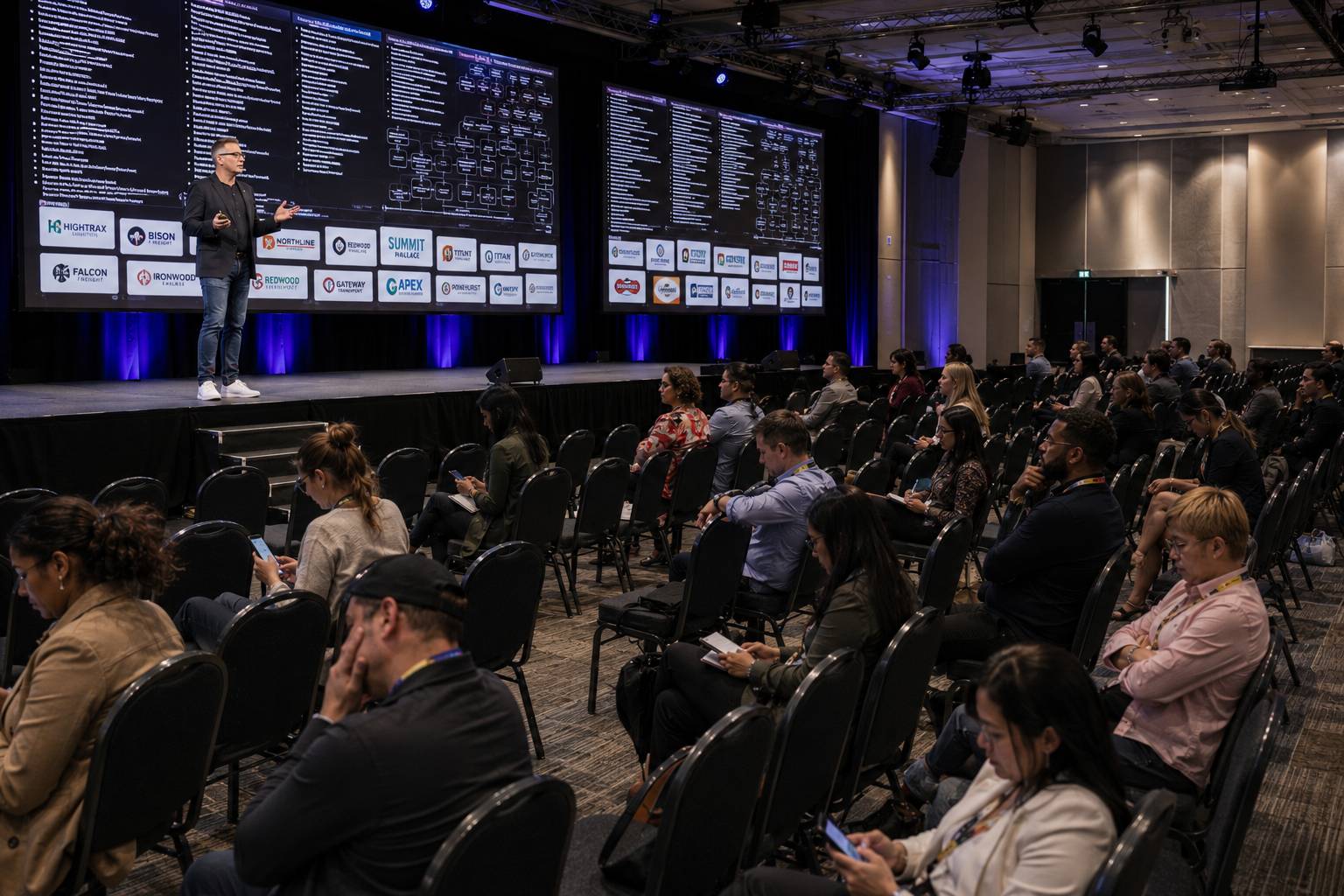
Please note: No conference attendees were harmed in the recreation of this AI conference facsimile.
This is my first blog post using a new product we’ve built at Too Many Dreams that combines human inspiration and AI tools to scale my output.
Everything I post is personally inspired by my lived experience, with many posts still written entirely by me. Others take human thought, curation, and editing to copy drafted by our AI solution.
Throughout, the goal is to ensure the writing never loses its soul. I will be interested to know if you can spot which is which? And how you feel about our work as a result.
I will be posting more about the product and when it will be available for clients to use to scale on brand content in the near future. Watch this space.
12.06.26 - Posted by Stephen Jenkins
Share:
Related Posts

08.10.26 - Posted by Katrina Jackson
Series 3 of the CTV Podcast launches with new host